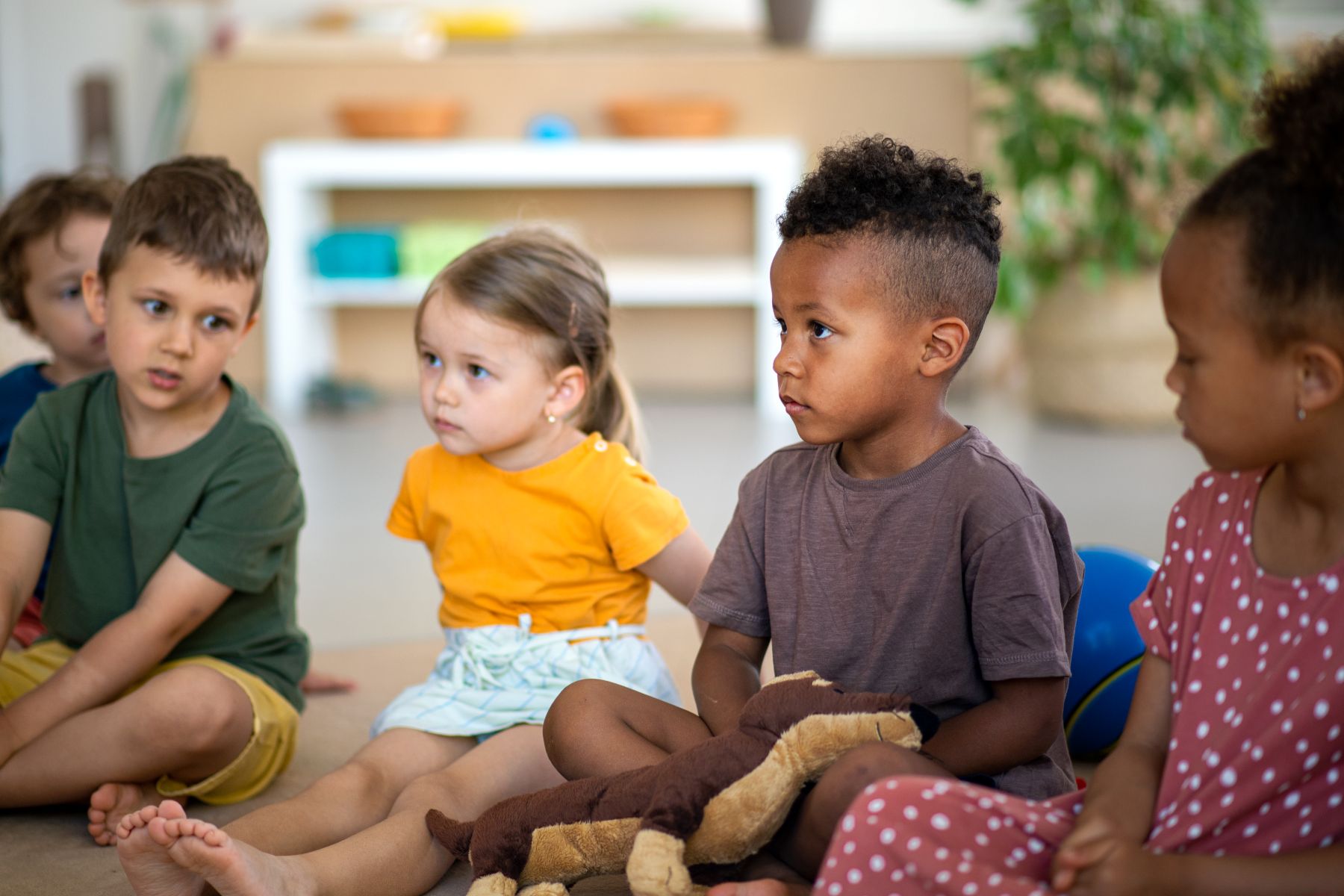
At the heart of quality early learning environments is a simple but powerful idea: children are active participants in their own learning.
In early learning environments children are given the opportunity to express ideas, make choices, form relationships, explore their environment, and shape their daily experiences in meaningful ways.
When early childhood educators place children at the centre of decision-making, they are not only supporting learning. They are also upholding children’s rights.
The United Nations Convention on the Rights of the Child outlines clear expectations for how children should be respected and supported in all settings, including early learning environments.
Two articles are especially relevant to elevating children’s voices:
Article 12: Respect for the views of the child
Children have the right to express their views freely in all matters affecting them, and those views must be given due weight according to the child’s age and maturity.
Article 13: Freedom of expression
Children have the right to express themselves through speech, drawing, play, and other forms of communication.
In early learning environments, these rights are not abstract. They come to life in everyday interactions, routines, and relationships.
Children do not only express their ideas through words. In fact, much of their communication happens through play, movement, behaviour, expression, and interaction.
Early childhood educators are uniquely positioned to interpret and respond to these forms of communication. This is where professional knowledge of child development becomes essential.
ECEs observe closely to understand:
This interpretation allows educators to respond in ways that genuinely reflect children’s voices, even when those voices are not verbal.
Play is one of the most important ways children communicate what they know, wonder about, and experience.
Through play, children:
When early childhood educators support learning through play, they are creating space for children’s voices to be heard in authentic and meaningful ways.
Rather than directing all experiences, educators observe, listen, and extend play based on what children are already expressing.
This approach ensures that children’s ideas are not only heard but are actively shaping the learning environment.
Another essential principle in early learning environments is inclusion.
Every child has the right to participate, regardless of ability, language, background, or communication style. Inclusion ensures that all children have equitable opportunities to express themselves and be understood.
This requires intentional practice from early childhood educators, including:
Inclusion is what makes children’s rights real in practice, not just in principle.
Early childhood educators play a critical role in ensuring that children’s voices are not only heard but meaningfully acted upon.
This happens through:
ECEs act as interpreters, facilitators, and advocates for children’s perspectives within the daily life of the early learning environment.
When children are placed at the centre of decision-making, the focus of early learning shifts.
Instead of asking only what adults want children to learn, we also ask:
This approach strengthens relationships, supports engagement, and honours children as capable and competent participants in their own learning.
Early childhood educators make children’s voices visible every day.
Through observation, reflection, play-based practice, and intentional interaction, ECEs ensure that children’s ideas, preferences, and experiences shape the environments they are part of.
This work is often subtle and deeply embedded in daily practice, but its impact is significant. It supports children’s sense of identity, belonging, and agency.
When children’s voices are recognised and valued, they learn that their ideas matter. And when children learn that their voices matter, they carry that understanding with them far beyond the early learning environment.
This is the quiet but powerful impact of early childhood educators: making space for children’s voices, and ensuring those voices are heard, respected, and acted upon.

We are committed to listening to the diverse voices of the current and future ELCC community. Your questions, concerns, and opinions are important to us. We appreciate you taking the time to reach out and collaborate with us.
WE WANT TO HEAR FROM YOU